
Humans have a quiet way of convincing themselves of things—not because they’re true, but because they feel safer to live with than the alternative.
I don’t think we’re actually afraid of failure. I think we’re afraid of the moment we have to call something a failure—when it doesn’t happen by the time we think it should, or in the way we imagine, and suddenly it feels like it means something about us. Because failure needs a timeline. It needs an expectation. Without those things, what is it really?
Just experience.
Just movement.
Just something that doesn’t go the way we planned… yet.
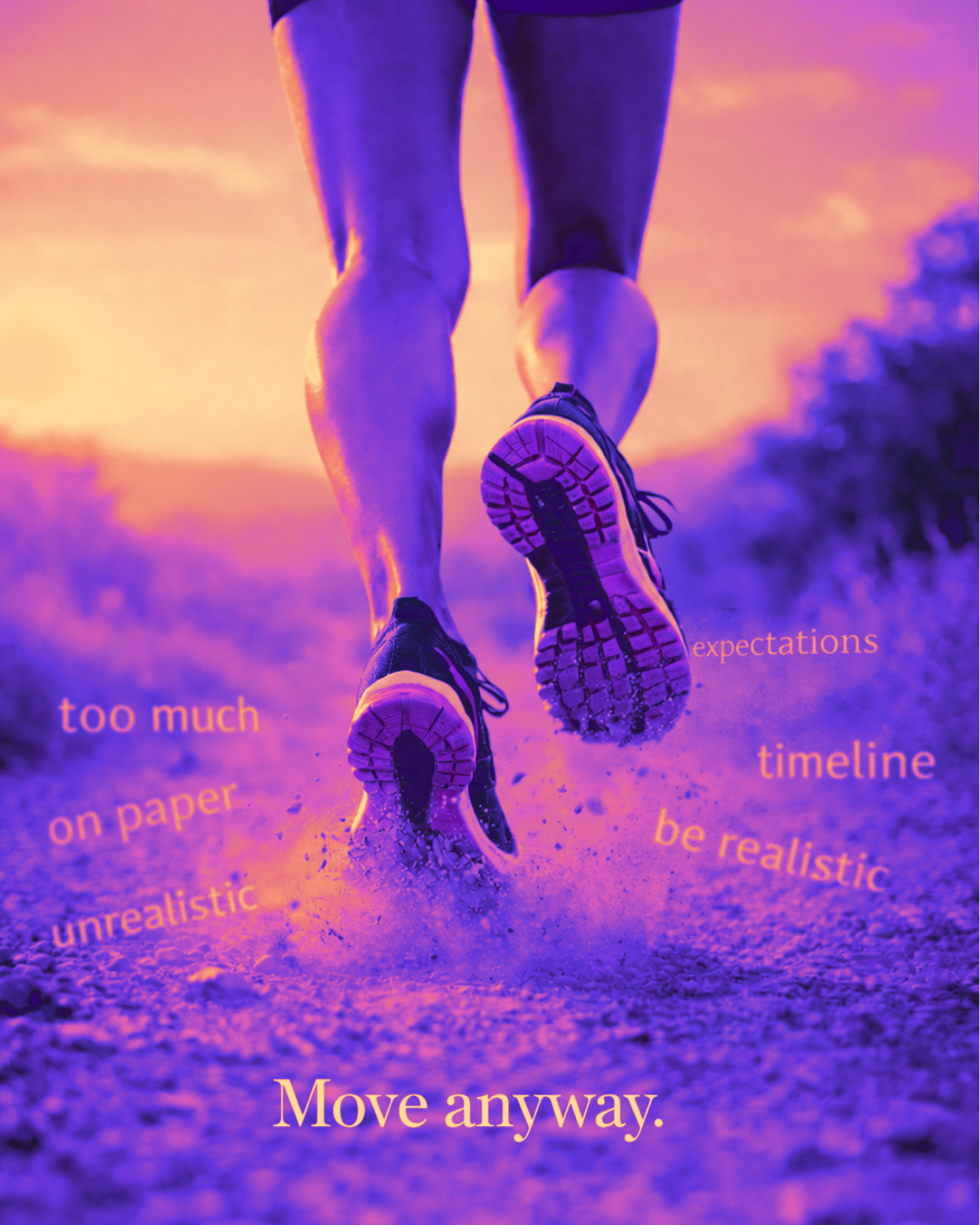
I’ve always been someone who believes I can pull things off—big things, unrealistic things, the kind that don’t make sense on paper. And that part of me got labelled early.
Imaginative.
Over the top.
Too much.
For a while, I believed it. I’d try to quiet that part of me. But every time I did, things in my life got chaotic, fast. It took me a long time to realise that the gift of optimism wasn’t the problem—it was the direction.
So I stop pushing it down.
I build a life that actually supports it. Not blindly—never blindly. What looks like instability from the outside is me learning, constantly. Hairdressing, personal training, nutrition, yoga, aesthetics, massage therapy, herbal remedies… the list goes on. I follow what I’m drawn to and build a foundation that doesn’t fit into one title, but shows up in everything I do. Because knowledge is powerful—the more you understand, the more you can adapt, adjust, and trust yourself in the moment instead of relying on guesswork.
A year ago, I made a decision to bike 600 kilometres across Southern Ontario on a busted hip. That doesn’t make sense on paper—but I don’t live my life on paper. I understand my body, I trust my training, and I do it. Then I had my hip replacement. Six weeks later, I was back at work. Eight months later, I’m running again. And now I’m planning another 600-kilometre ride—on a brand new hip, not even knowing how it’s going to respond.
At some point along my journey, it stopped mattering to me what people think. And when that happened, fear went with it.
When I was younger, I unconsciously adopted a motto: no expectations, no letdowns. It wasn’t about lowering the bar—it was about refusing to let expectations become limits. Not because I don’t care, but because I care enough to show up fully without attaching my worth to how something turns out.
You don’t need certainty to move forward.
You don’t need guarantees.
Trust that you have the knowledge to figure it out.
Because fear needs witnesses. It needs judgment. It needs the possibility of being seen as having failed.
Remove that, and what you’re left with is freedom.
There’s a difference between ego and that kind of trust. Ego says it has to work—there’s no other option. What I follow allows for risk. It allows for the unknown. It moves anyway.
So I don’t believe in failure the way I used to. I think a lot of what we call impossible… is just what we’ve been taught not to try.
The moment you stop letting other people decide what’s possible for you—
Everything changes.